
Capacity Building training and citizen science
Training and Capacity Building for Managers of Marine Natura 2000 Sites and Stakeholders
The effective management of Natura 2000 marine sites requires technical expertise, communication skills and the active participation of local communities. For this reason, the LIFE A-MAR NATURA2000 project has developed two programmes: one on citizen science and the other on training. The former is aimed at the local population and visitors, whilst the latter is aimed at managers of marine protected areas, environmental education professionals and key stakeholders operating in coastal and marine areas of Italy and Spain.
Training
The training activities have been designed with the aim of strengthening professional skills and improving the ability to communicate and promote the marine sites of the Natura 2000 Network, whilst fostering dialogue between biodiversity conservation and socio-economic activities. Indeed, well-trained managers, educators and local operators are key to ensuring the effective management of marine protected areas and maintaining their good conservation status.
The training courses have been developed in line with the experience and training strategy of the LIFE INTEMARES project, which identifies the main barriers and training needs for the effective management of the marine areas of the Natura 2000 Network. Based on these guidelines, training programmes have been organised focusing on site management, environmental communication and mediation between the various stakeholders in coastal areas.
During the project, training sessions were organised for managers of Natura 2000 sites, environmental educators, nature guides, tour operators, professional and recreational fishermen, and other users of the sea. The courses addressed key topics for the management and assessment of marine areas, including:
- the effective management of marine sites within the Natura 2000 network;
- the development of cross-cutting skills relevant to the governance of protected areas;
- mediation and conflict resolution between conservation and economic activities;
- communication and awareness-raising strategies regarding marine sites within the Natura 2000 network;
- the role of environmental guides and interpreters in promoting the natural values of these areas.
The programme has included both face-to-face and online training sessions. Digital tools and participatory methodologies have been used to encourage active engagement from participants and the exchange of experiences between different regions.
Thanks to these activities, hundreds of professionals and stakeholders involved in the management and use of marine areas within the Natura 2000 Network have been able to strengthen their skills, improve their ability to communicate the value of marine biodiversity, promote responsible behaviour and encourage greater participation from local communities.
The results and experiences gained during the training activities have been compiled in a Guide to Good Training Practices, which serves as a useful tool to support future training initiatives and strengthen skills in the management of marine areas within the Natura 2000 Network.
Citizen Science
In Spain, a programme of citizen science activities and workshops has also been carried out, combining theoretical and practical elements. The aim has been to raise awareness among the local population and visitors of the significant value of the marine sites within the Natura 2000 Network, as well as to promote the LIFE A-MAR Natura2000 project and the fundamentals of citizen science.
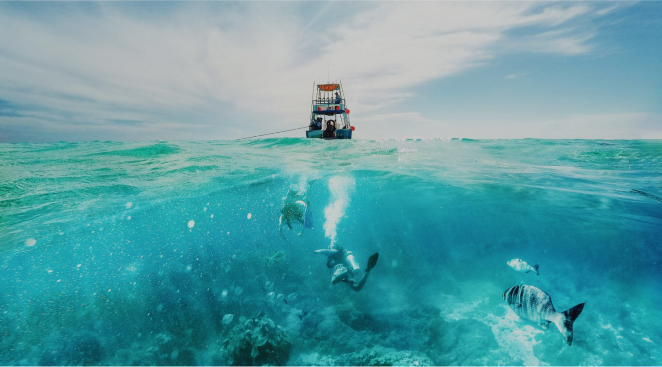
The practical part of the workshops included whale watching from a boat, snorkelling and walking tours to observe the flora and fauna of each protected area. The theoretical part included training on how to observe, collect and record data on marine biodiversity using digital tools and applications.