



Marco Corda’s first prize tells the story of Eleonora’s falcon and the importance of participation in protecting Natura 2000 sites
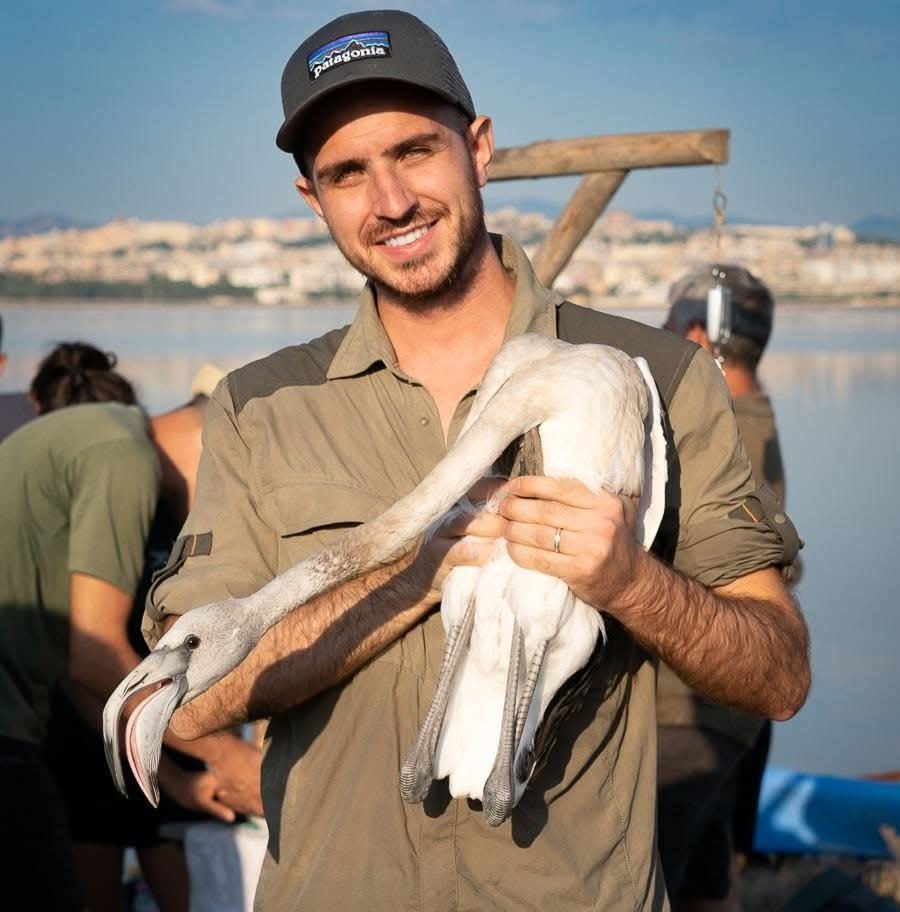
Marco Corda, an officer of the Regional Forestry Corps of Sardinia, is a wildlife photographer driven by passion—a passion rooted in a deep connection with the animal world. Since childhood, he has observed, studied, and experienced nature with curiosity and respect; from the age of 15, he felt the need to capture those extraordinary, unique, and unrepeatable encounters through photography, turning them into images capable of telling stories and sharing emotions.
More than a wildlife photographer, Corda defines himself as a naturalist who uses photography as a means of expression. His primary interest remains wildlife and the delicate balance of ecosystems. He is a member of AFNI (Italian Association of Nature Photographers), Sardinia section, and collaborates with LIPU in monitoring and census activities, particularly those concerning the osprey.
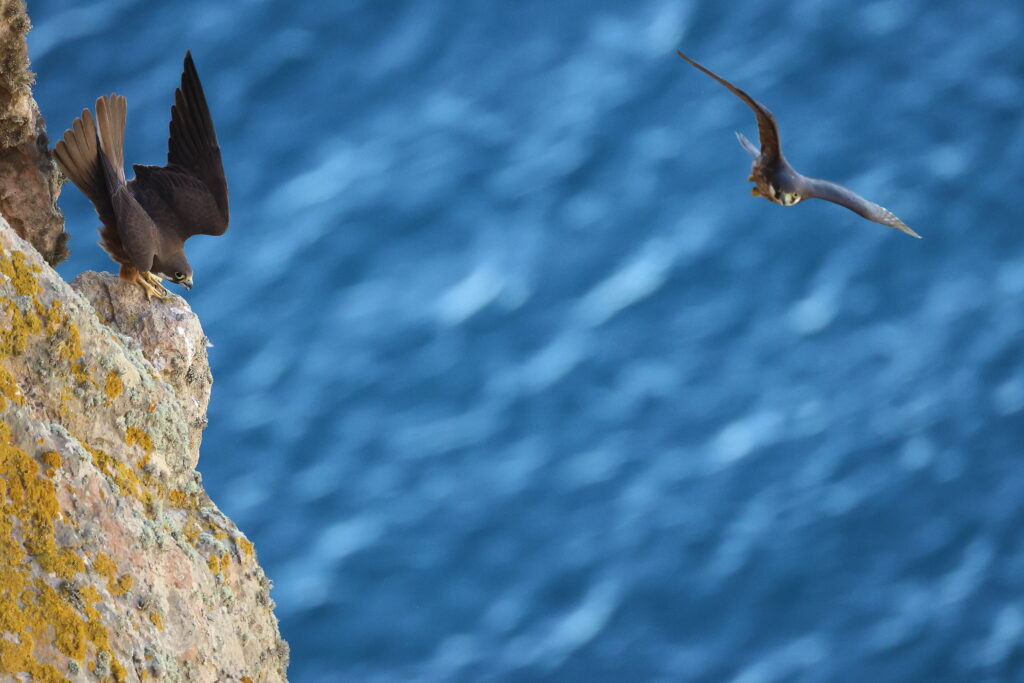 His work fits perfectly within the context of Natura 2000 sites—places of extraordinary importance for the conservation of Mediterranean biodiversity. Among them stands out the island of San Pietro, in southwestern Sardinia, within the LIPU Oasis, where the photograph that earned him first prize in the LIFE A-MAR Natura 2000 competition, in the category “Life above and below the sea,” was taken. This island, now also known as Carloforte, was already known in Roman times as Accipitrum Insula, meaning “island of the hawks,” a testament to its long-standing connection with birds of prey that still inhabit its cliffs today.
Here lies one of the most important colonies of Eleonora’s falcon, a fascinating migratory bird that travels thousands of kilometers each year from Madagascar to nest on these cliffs. The award-winning photograph captures a moment of rare intensity: two males in a display of confrontation, caught in the fleeting instant when one spreads its wings and fan-shaped tail to appear larger and intimidate its rival. An image achieved after hours of observation, patience, and respect for nature’s timing.
Capturing images like this requires not only technical skills but, above all, a deep understanding of species and their behavior, especially during sensitive phases such as nesting. It is precisely in these moments that the importance of a mindful approach becomes clear: nature is not a photographic set, but a complex and fragile system that must be approached “on tiptoe.” As Corda emphasizes, the first tool is not the camera but the binoculars—observation comes before photography.
In an age dominated by speed and an overabundance of images, wildlife photography becomes an invitation to slow down, to listen, and to understand. It is through this slowness that a genuine relationship with the environment develops—one that can transform observers into conscious custodians.
Natura 2000 sites are not only areas to be protected but places to be experienced and understood. Through direct experience and the observation of habitats and the species that inhabit them, a true culture of conservation can be built. Living these landscapes means understanding their value, recognizing the richness of biodiversity, and becoming an active part in its protection.