

26th March 2026
LIFE A-MAR NATURA 2000: achievements and outlooks at the project’s closing event
The achievements and outlooks for the conservation of marine habitats within the Natura 2000 network in Europe were the topics addressed at the closing event of the LIFE A-MAR NATURA 2000 project, which took place online on 25 March 2026.
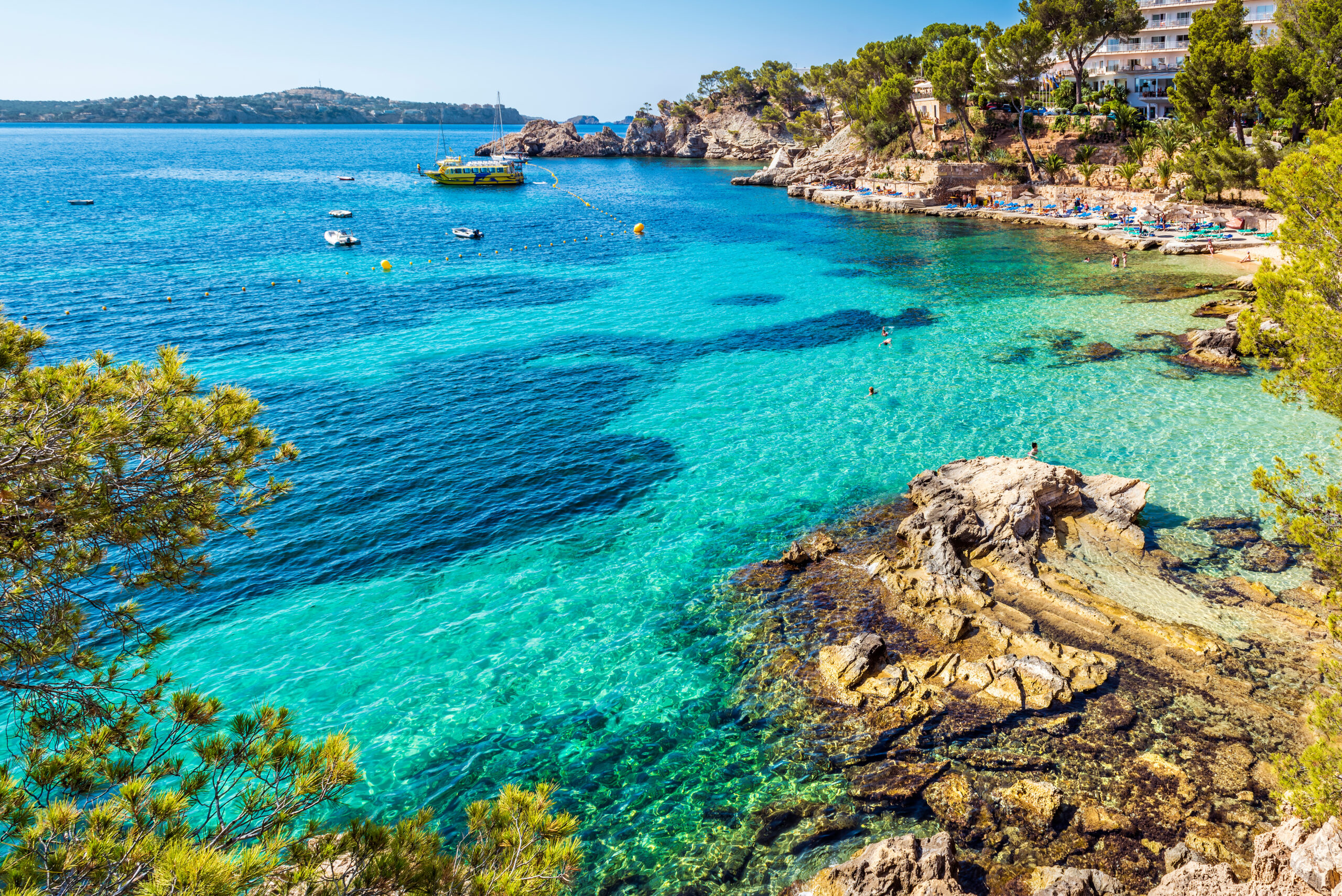
The project was launched with the aim of promoting knowledge and awareness of the marine and coastal areas of the Natura 2000 network in Italy and Spain, engaging a wide audience of stakeholders, maritime operators and citizens through an integrated communication strategy. Throughout the project, various tools were utilised — ranging from institutional communication to digital platforms, storytelling and multimedia production — to raise the profile of the challenges associated with marine conservation and foster a greater understanding of the importance of marine Natura 2000 sites.
The event opened with an address by Luca Santini, President of Federparchi, lead partner of the project, who emphasised that Life A-MAR is a model to be replicated, characterised by its ability to combine public participation and scientific research, emotional engagement and targeted conservation actions. In his speech Santini stressed that projects such as LIFE A-MAR are essential to turn objectives and strategies into concrete action. He underlined that, even when a project formally comes to an end, its work does not disappear: results, skills and relationships remain and continue to generate value over time. Federparchi will continue its commitment to biodiversity protection, environmental communication and the promotion of Natura 2000 sites, also in line with the After LIFE Plan. It is an ongoing commitment that continues every day alongside Italy’s protected areas.
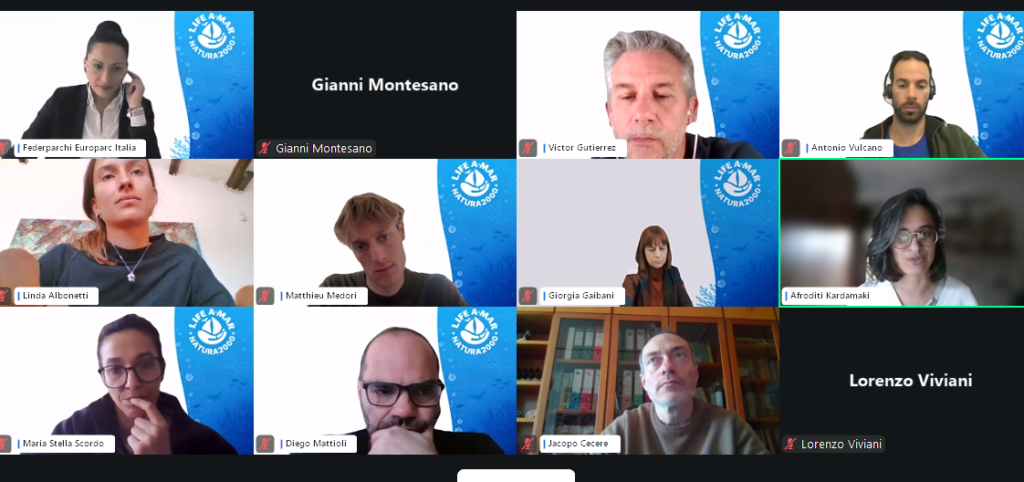 During the LIFE A-MAR closing event, Maria Villani, , projects manager at Federparchi acting as moderator, guided participants through the key moments of the meeting, highlighting the achievements and the significance of the project’s journey. In her speech, she emphasised the role of LIFE A-MAR in raising awareness of Natura 2000 marine sites and in fostering more informed and sustainable behaviour. She thanked the project partners, co-funders and Italian Marine Protected Areas that had actively participated in the various actions. She highlighted in particular Federparchi’s commitment to organising onshore events during the sailing campaign, citizen science activities, scientific events, training and capacity building. She also highlighted the work carried out to monitor the level of awareness of Natura 2000 sites among citizens and tourists. In introducing the final round table, she emphasised the importance of fostering dialogue between research, management, communication and international cooperation. Her speech reiterated that marine conservation requires not only rules and tools, but also participation, awareness and shared responsibility.
This was followed by presentations from the partners’ representatives. Giorgia Gaibani, from Lipu-BirdLife Italia, spoke about the challenges still facing the Natura 2000 network, as well as the tools needed to tackle them and achieve the objectives, through research and public engagement. As a positive and replicable example, she highlighted the activities carried out during the European day celebrating the Natura 2000 network, ‘Natura 2000 Day’: 17 events across 10 Italian regions involving over 550 people, including residents, tourists, students, institutional representatives and volunteers, all working to connect people with N2000 marine sites.
Maria Stella Scordo, of Triton Research, highlighted how the project’s communication efforts went beyond mere public outreach to become an opportunity to engage and involve people who wish to play an active role in protecting marine biodiversity. Scordo recalled the success of the sailing campaigns to raise awareness of the marine protected areas within the Natura 2000 network in Italy (2023) and Spain (2025), the Triton Cup regattas in 2024 and 2025, and highlighted the development of the AMAR Sea LIFE project app as a communication tool that has made it possible to translate the bureaucratic/technical language of Natura 2000 sites into something more accessible for users and more engaging, thanks to the ability to add images.
Víctor Gutiérrez, from the Biodiversity Foundation, believes that projects such as LIFE A-MAR represent a great opportunity for marine conservation, as they help to drive initiatives aimed at improving skills, raising public awareness of the importance of the oceans, and fostering international cooperation. After outlining the activities carried out in Spain, including 40 training sessions, an awareness campaign and 15 citizen science workshops, Gutiérrez expressed confidence that similar initiatives would emerge to improve the management of the Natura 2000 network.
The results of the LIFE A-MAR NATURA2000 project were presented by Diego Mattioli of Triton Research, who outlined the main actions undertaken and the objectives achieved, which stemmed from the concept of ‘knowing and loving the sea in order to protect it’. Mattioli focused on awareness-raising activities in Italy and Spain: 24 seminars, 2 sailing campaigns, 4 replication projects (Malta, France, Greece and Albania), training activities involving over two thousand managers; and an intensive digital communication campaign that reached over 12 million contacts.
Live from the island of Montecristo, a Natura 2000 site, Mario Arcenni, Commissioner of the Tuscan Archipelago National Park – which, together with the Cinque Terre and Asinara national parks, is a co-funding partner of the project – joined the meeting. Arcenni highlighted the park’s commitment also in terms of the activities carried out to build relationships and engagement to raise awareness of the marine sites within the European network.
Gianluca Mureddu, President of the Asinara National Park sent a message of greeting underlining the importance of the projects for conservation of marine biodiversity.
During the event, an excerpt was screened from the documentary produced as part of the project, ‘Unseen Guardians: routes for biodiversity’, which recounts the activities carried out and the value of protected marine ecosystems through images and testimonies gathered in the field.
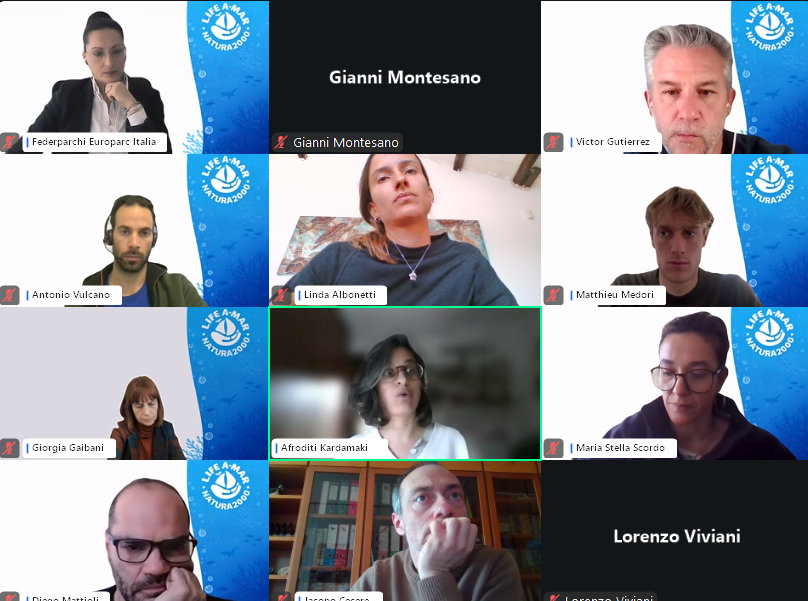 The highlight was the round table discussion on the future of the marine Natura 2000 network and conservation challenges, moderated by Maria Villani (Federparchi), focusing on the outlooks for marine Natura 2000 sites. The discussion was attended by experts and representatives from leading European scientific and environmental organisations: Jacopo G. Cecere, ISPRA – National Institute for Environmental Protection and Research; Antonio Vulcano, BirdLife Europe and Central Asia; Matthieu Medori, MedPAN – Mediterranean Network of Marine Protected Areas; Linda Albonetti, CESTHA – Experimental Centre for Habitat Conservation (APS) e Afroditi Kardamaki, Hellenic Centre for Marine Research.
The discussion provided an opportunity to reflect on long-term governance strategies, cooperation between institutions, stakeholder engagement and knowledge transfer beyond the project’s duration, whilst also addressing the delicate balance between biodiversity conservation and socio-economic activities linked to the sea.
The event concluded with a speech by Lorenzo Viviani, President of the Cinque Terre National Park, who emphasised that the end of the project coincides with the start of other initiatives, based on what has been achieved, with a view to safeguarding of biodiversity even beyond the boundaries of natural protected areas, in order to systematise the work carried out and raise awareness of the importance of nature conservation. Protected areas must serve as great schools for environmental protection for everyone.